Skip to content

Table of Contents
Waxing Hair Removal pulls hair from the root rather than trimming it at the skin’s surface. This difference affects how the skin feels afterward and how quickly visible hair returns. Professional waxing can be used on several areas of the face and body, making it a practical choice for people with different grooming preferences.
How long do waxing results usually last?
Waxing results can last several weeks, although the exact duration depends on the treatment area, hair growth cycle, and individual rate of regrowth.
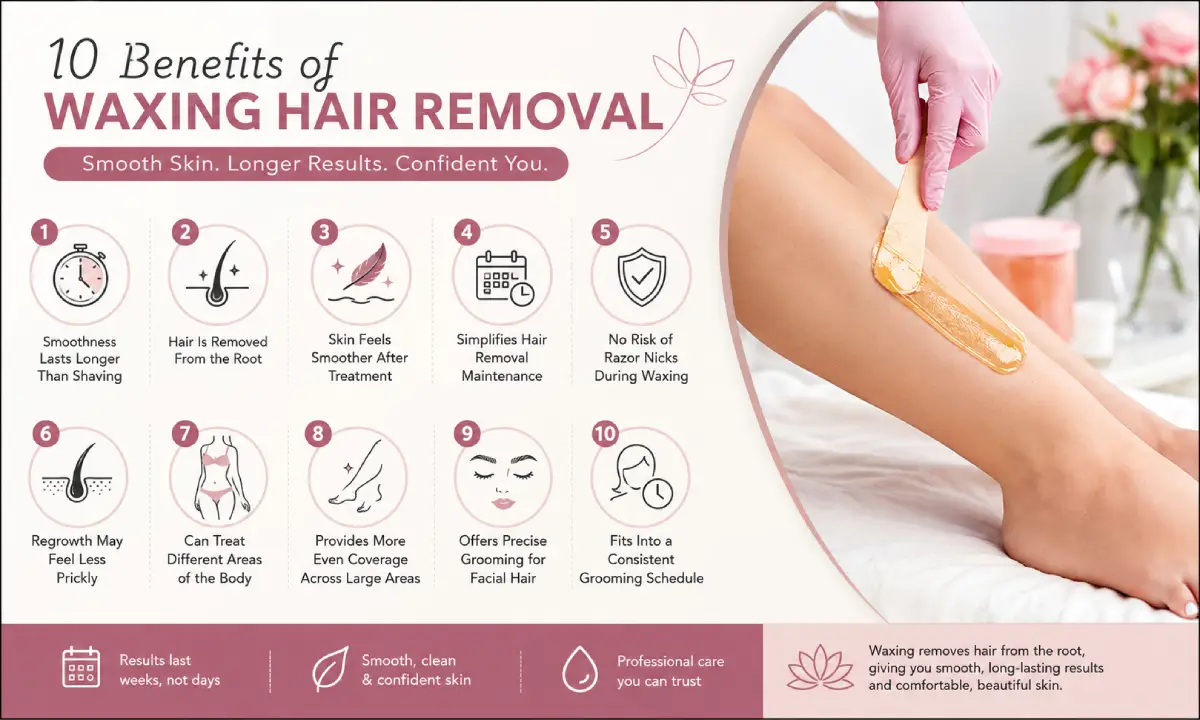
The benefits of waxing hair removal extend beyond simply having less visible hair. Here are 10 reasons people may choose waxing as part of their regular grooming routine.
1. Smoothness Lasts Longer Than Shaving
A razor cuts hair at or just above the surface of the skin, which means stubble can return relatively quickly. Waxing removes the entire hair from the follicle, so it takes more time for new growth to become visible.
The length of time between appointments varies depending on the treatment area and individual hair growth cycle, but many people appreciate not having to reach for a razor every few days.
2. Hair Is Removed From the Root
The way waxing removes hair is one of its defining advantages. Wax adheres to the hair and allows it to be pulled from the follicle rather than shortened.
This creates a different finish compared with shaving or trimming. Instead of leaving a short portion of the hair behind, waxing clears the treated area until new hair begins growing through the follicle again.
3. Skin Feels Smoother After Treatment
Freshly waxed skin can have a clean, smooth texture because the treatment removes unwanted hair without leaving behind the blunt stubble associated with shaving.
Achieving smooth skin after waxing treatment also depends on proper preparation and aftercare. Keeping the area moisturized, following the provider’s instructions, and avoiding unnecessary friction immediately after an appointment can help support comfortable skin as it settles.
4. Waxing Can Simplify Hair Removal Maintenance
Frequent shaving can become another task to fit into a busy morning or evening routine. Since waxing results generally last longer, appointments can reduce how often someone needs to think about removing hair.
This may be especially useful for areas that require frequent shaving to remain visibly smooth. Instead of managing those areas every few days, clients can schedule waxing based on their individual regrowth.
5. There Is No Risk of Razor Nicks During Waxing
Shaving requires a blade to move directly across the skin. Even with careful technique, small cuts and nicks can happen, particularly around curves, ankles, knees, or other areas that are difficult to shave evenly.
Waxing does not involve a razor, so razor-related cuts are taken out of the equation. Temporary redness or sensitivity may still occur after waxing, which is why appropriate technique and aftercare remain important.
6. Regrowth May Feel Less Prickly
Hair that has been shaved has a blunt edge because it has been cut across the shaft. As that hair grows, the short, coarse-feeling tip can create noticeable stubble.
Waxed hair grows back naturally from the follicle instead. New growth can therefore feel less prickly to the touch than freshly emerging shaved hair. Individual hair texture and growth patterns still influence how regrowth feels from person to person.
7. Waxing Can Treat Different Areas of the Body
Another useful feature of waxing is its versatility. Depending on the services offered by a provider, waxing may be appropriate for small facial areas as well as larger areas of the body.
Common waxing areas can include:
- Brows
- Upper lip
- Chin
- Face
- Arms
- Underarms
- Legs
- Back
- Chest
- Bikini area
This flexibility allows clients to focus on a single concern or consider full body waxing hair removal when they want to manage unwanted hair across several areas.
8. Waxing Provides More Even Coverage Across Larger Areas
Removing hair evenly from areas such as the legs, arms, back, or chest can take time with a razor. It is also easy to overlook small patches, especially in areas that are difficult to see or reach.
Professional waxing allows larger sections to be treated systematically. This can create more consistent coverage without repeatedly running a razor over the same area. The benefit is particularly relevant for people who want a uniform result across a broader treatment area.
9. Waxing Offers Precise Grooming for Facial Hair
Not every waxing appointment involves removing hair from a large area. Facial waxing can be useful when precision matters, such as cleaning up the brows or addressing isolated hairs around the chin and upper lip.
Professional application gives the provider control over which hairs are removed and which are left in place. Brow waxing, for example, can help define the existing brow shape without removing more hair than necessary. Facial waxing can therefore support both hair removal and routine grooming.
10. Appointments Can Fit Into a Consistent Grooming Schedule
Hair grows in cycles, so not every strand appears at exactly the same time. Maintaining a regular waxing schedule can make it easier to plan hair removal around the way an individual’s hair grows.
A professional can also recommend an appropriate interval between appointments based on the area being treated and the rate of regrowth. This creates a more predictable routine instead of waiting until unwanted hair becomes bothersome and then removing it at home.
What to Expect Before and After a Waxing Appointment
Hair generally needs enough length for the wax to grip it effectively, so shaving shortly before an appointment may interfere with treatment. Your provider can advise you on how long to let the hair grow beforehand.
After waxing, some temporary redness or sensitivity is possible. Clients may be advised to avoid excessive heat, friction, intense exercise, or certain skin products for a short period, depending on the treatment area. Following professional aftercare instructions can help minimize unnecessary irritation.
Exfoliation may also be recommended once the skin has had time to settle. Appropriate exfoliation can help manage the buildup of dead skin around the follicles, although timing and product selection matter, particularly for sensitive areas.
Facial Waxing at The Aesthetic Lounge Medspa
Clients considering waxing hair removal in Lake Forest, IL, The Aesthetic Lounge Medspa offers facial waxing services for men, women, and others who want to address unwanted facial hair.
Results can keep the skin feeling smooth for weeks, depending on individual hair growth. Waxing is intended for temporary hair removal. Clients interested in longer-term hair reduction can ask about laser hair removal, while IPL may be considered for pigmentation concerns rather than unwanted hair removal itself.
Book Your Professional Waxing Hair Removal for Silky, Smooth Results.
Frequently Asked Questions
Can both men and women get facial waxing?
Yes, facial waxing can be performed for men and women who want to remove unwanted hair from suitable areas of the face.
How long should hair be before a waxing appointment?
Hair needs to be long enough for the wax to grip effectively, so clients should follow their provider’s recommendations about growth before treatment.
Can I shave between waxing appointments?
Shaving between appointments can interrupt the waxing schedule because it cuts hair at the surface instead of allowing sufficient length for the next wax.