Skip to content


Table of Contents
If you have ever caught your reflection and noticed that the line between your brows stays put even after your face relaxes, you are not imagining it. Most people start searching, run into three product names again and again, and end up more unsure than when they started. That is where neurotoxins at The Aesthetic Lounge Medspa come in.
How does your provider choose the right neurotoxin for you?
This decision belongs in the consultation, not on a product list. Dr. Cohen reviews your facial anatomy, muscle strength, treatment history, and what you hope to see. Injections are not right for everyone, and you deserve to hear that plainly. For anyone considering Neurotoxins in Lake Forest, IL, The Aesthetic Lounge Medspa is a no-pressure place to ask anything.
The Short Answer: No Single Neurotoxin Wins for Everyone
No single product is best for every patient, because all three use the same active ingredient and work in the same basic way. Botox vs Dysport for wrinkles is a fair question, and patients ask it constantly, but it rarely has a universal answer.
Your result depends on how well the product matches you. The lines that bother you in the mirror, how your muscles move, how strong that movement is, and how soon you want to see a difference all factor into the decision. Your injector’s technique matters as much as the vial itself, because placement and dosing determine whether the result looks like you or like something applied to you.
Your preference can also shift over time. The product that suits you best today may not be the one you stay with a few years from now, and that is completely normal.
What Botox, Dysport, and Xeomin Have in Common
All three are wrinkle relaxers made from botulinum toxin type A, a purified protein that temporarily softens the muscle movement behind expression lines. Rather than filling anything in, they quiet the repeated contractions that fold the skin in the same spot day after day.
The practical details are similar too. Neurotoxin injections for facial wrinkles usually take about 15 to 30 minutes, and most patients return to their day afterward with little more than mild tenderness at the injection sites. Results typically last three to six months, though this varies from person to person.
Because they share so much, the real differences are smaller than marketing suggests.
Where Botox, Dysport, and Xeomin Actually Differ
The Botox, Dysport, and Xeomin differences that patients notice come down to timing, how the product settles in the treated area, and formulation.
- Onset: Dysport is often the quickest to show early changes, Botox typically begins within a few days, and Xeomin tends to build more gradually. Most patients see the full effect around two weeks with any of them.
- Spread: Dysport is often described as settling across a slightly wider area from each injection point, while Botox and Xeomin are generally described as staying closer to where they are placed. Clinicians disagree on how meaningful this is, so treat it as preference rather than settled fact.
- Formulation: Xeomin is a purified product without the added complexing proteins found in the other two, which is why it often comes up for patients who feel their results have become less noticeable over years of treatment.
One more thing worth knowing: units are not measured the same way across these products, so comparing unit counts between them tells you very little.
Matching the Product to the Area You Want Treated
The area you want treated often guides the choice more than anything else. Broader zones, such as the forehead, often call for a product that settles more widely, so a neurotoxin for forehead wrinkles may not be the same product you’d choose for a smaller target. Delicate, precise work, such as softening vertical lip lines, easing chin dimpling, or balancing one brow that sits a little higher than the other, usually calls for tighter control.
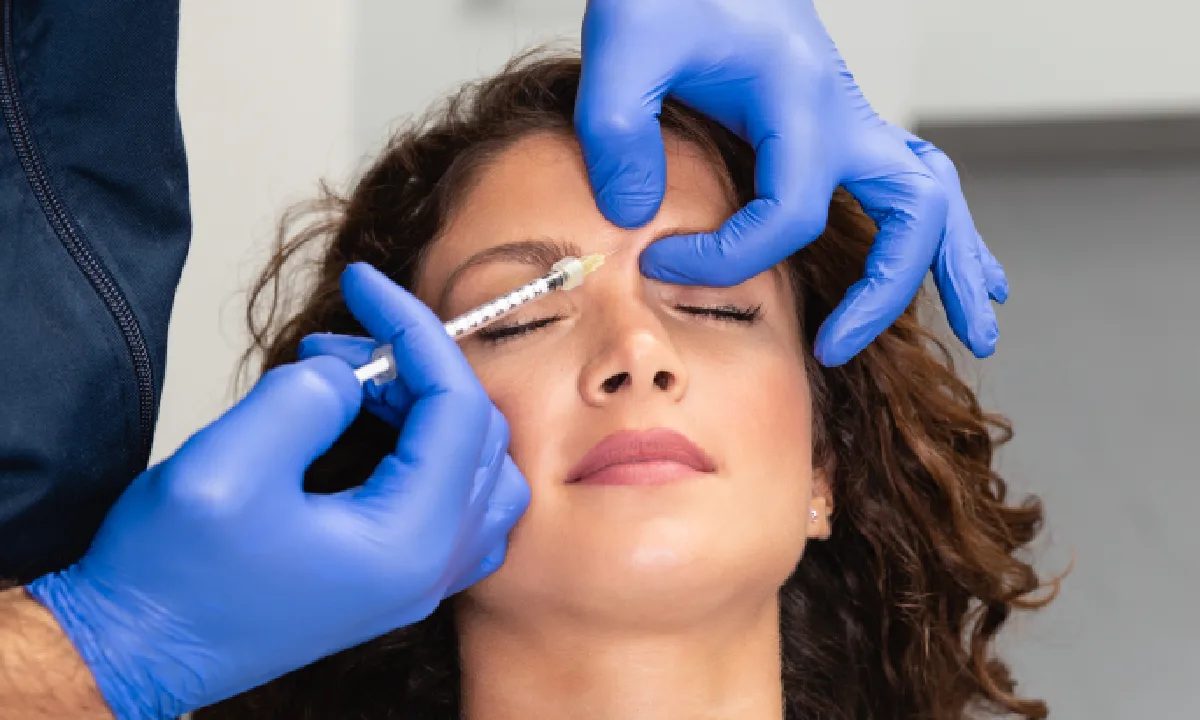
All three are commonly used for frown lines and crow’s feet, which brings it back to the hands holding the syringe. At The Aesthetic Lounge Medspa, Dr. Cohen uses these injectable wrinkle treatments for forehead and worry lines, frown lines between the brows, lateral brows, crow’s feet, vertical lip lines, the corners of the mouth, chin dimpling, and the jawline.
Why Your Wrinkle Type Matters More Than the Brand
The kind of line you have matters more than the name on the vial. An anti-wrinkle neurotoxin treatment targets dynamic rhytides, the lines that appear when you raise your brows, squint, or frown. Soften that movement, and those lines usually soften along with it.
Static rhytides are a different story. These creases stay visible even when your face is completely at rest, set by years of expression and sun. A wrinkle relaxer may make them look less pronounced as the muscle beneath quiets down, but it doesn’t erase them, and anyone promising otherwise is overselling what an injection can do.
Deeper, etched lines usually respond better to treatments that restore volume or resurface the skin, such as dermal filler or a chemical peel. That is not bad news. It simply means the right plan may involve more than one approach.
Plenty of patients have both kinds of lines at once, and a combined plan is common. Knowing which type you are looking at in the mirror is the first thing to sort out, well before anyone decides which product goes in the syringe. Your provider can sort that out.
Ready to Talk It Through
Choosing between neurotoxins gets much simpler when we look at your face and listen to what you want. The team at The Aesthetic Lounge Medspa will walk you through your options honestly and help you decide at your own pace. Smooth Wrinkles With the Right Neurotoxin Treatment. Book Now.